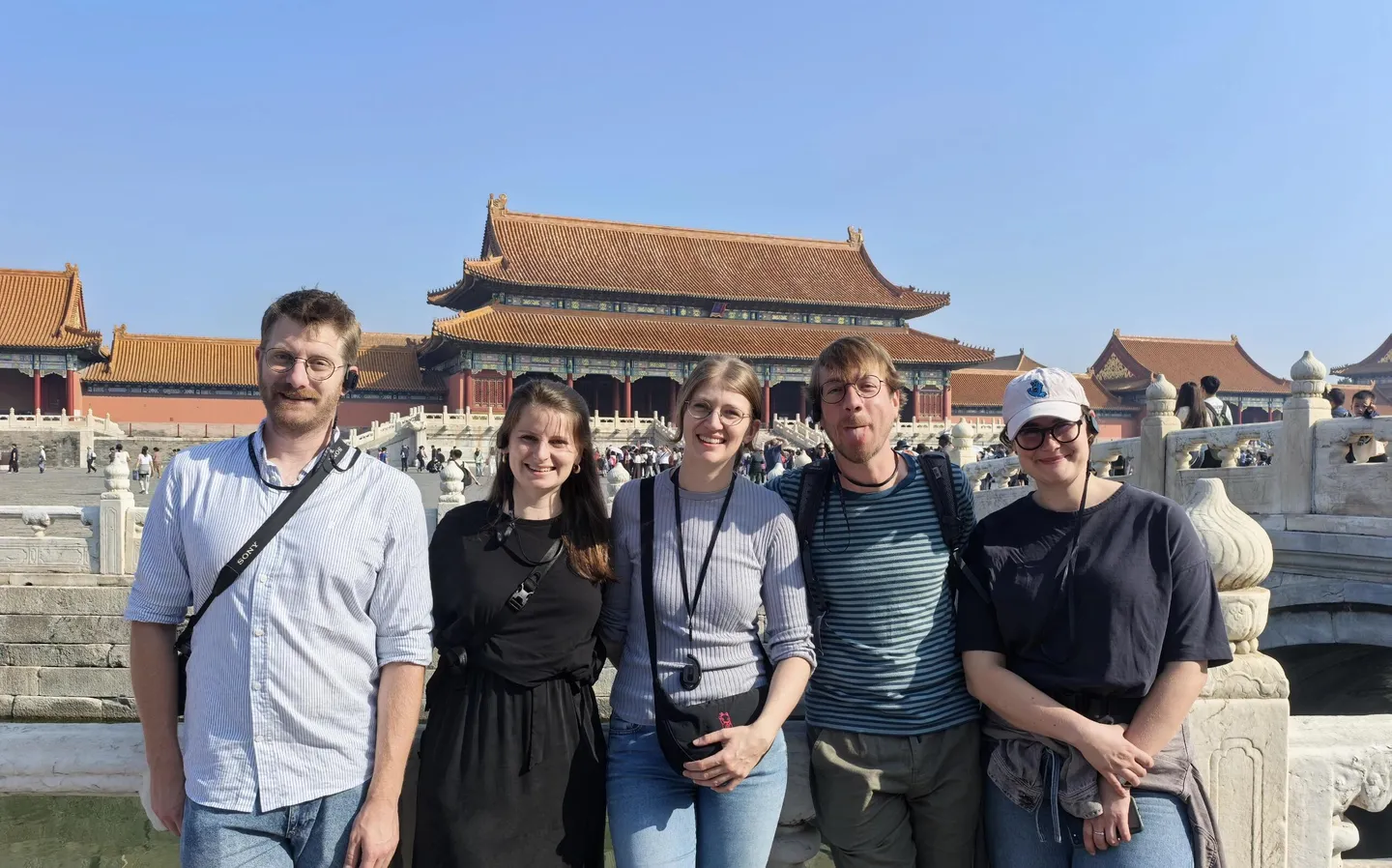

I Came for History. I Found It Still Breathing.
I thought Chinese history was terracotta warriors behind glass, museum plaques, a wall you photograph. Then I stood in a Chengdu temple running for 1,700 years, and a monk poured me tea like he did it every Tuesday. History here isn’t behind you. It’s next to you.
“On our third night in Xi’an, we walked the old city wall after dark. A grandpa was flying a kite on the same stones armies once marched on. He waved me over, pointed at the sky, said one word I understood: ‘Beautiful.’ That’s when it hit me. The history isn’t a story. It’s the ground you’re standing on.”
It doesn’t live in glass cases.
The warriors are stunning. But the real history is the noodle shop in a 600-year-old courtyard, the pagoda your grandma prayed at, the city wall you rent a bike on. China doesn’t put its past behind velvet rope. It just keeps using it.
You walk into it by accident.
One afternoon we got lost in a Beijing hutong. A door was open; inside, an old man was doing calligraphy at a table older than most European countries. He gestured us in. No ticket, no gift shop, no English. Just ink, tea, and a quiet hour.
Time here is a different speed.
In Xi’an, the Tang dynasty is 1,300 years away. In a European city, that’s a ruin. In China, it’s a restaurant. Once you feel that, you stop reading plaques and start watching the people.
I came to check off a civilization. I left realizing I’d been walking through one.
If your way includes getting lost, we know which doors to leave open.